
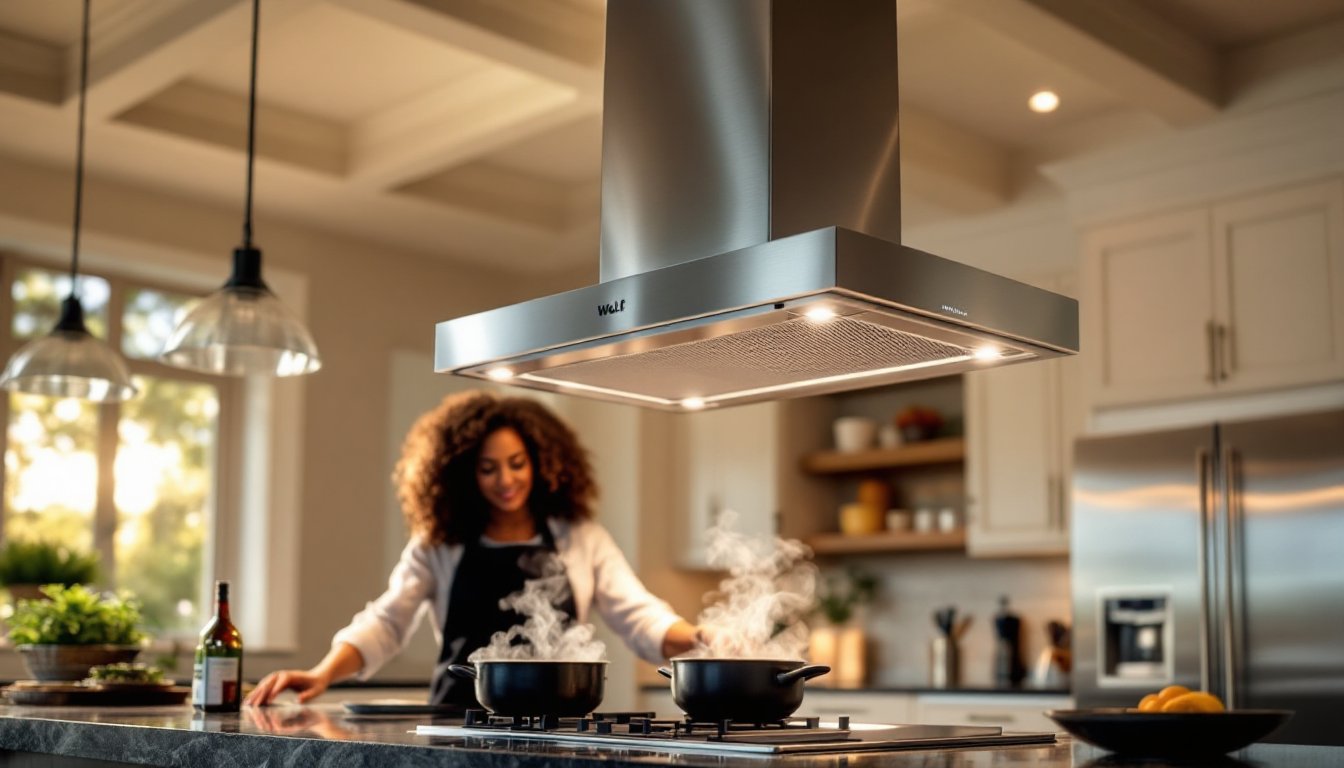
A Wolf range hood isn’t just another kitchen exhaust system, it’s a piece of commercial-grade equipment built for serious cooking. Whether you’re renovating a galley kitchen or designing a chef’s dream on a budget, choosing the right Wolf range hood can make the difference between a kitchen that smells like last night’s fish and one that stays fresh during heavy cooking. This guide walks you through what makes Wolf range hoods stand out, how to size and install them properly, and whether the investment fits your project and budget.
Table of Contents
ToggleKey Takeaways
- Wolf range hoods are commercial-grade kitchen appliances featuring sealed blower assemblies, stainless steel construction, and robust filtration systems that outperform standard residential hoods in durability and odor control.
- Proper sizing and configuration—under-cabinet, wall-mounted, or island—depend on your cooktop width, ceiling clearance, and ductwork routing complexity, with a Wolf range hood ideally matching or exceeding your cooktop width.
- CFM ratings (typically 600–1,200 for Wolf models) indicate ventilation power, but ductwork quality, diameter (6-inch or 8-inch rigid preferred), and run length under 20 feet matter equally for actual performance.
- Wolf range hood installation requires professional electrical work, secure mounting into studs or joists rated for 100+ pounds, proper ductwork with mastic sealing, and a motorized backdraft damper to prevent cold air backflow.
- Maintenance is straightforward—empty grease traps weekly, wash baffle filters monthly, and inspect ductwork annually—keeping your Wolf range hood efficient and quiet for years of heavy cooking.
- Wolf range hoods cost $1,500–$7,000+ depending on size and features, with installation adding $500–$3,500, but the investment delivers long-term durability, odor control, and kitchen coherence that justify the expense for homeowners who cook regularly.
What Makes Wolf Range Hoods Stand Out
Wolf has built its reputation on high-performance kitchen equipment used in restaurants and professional kitchens. Their range hoods reflect that heritage: heavy-duty motors, stainless steel construction, and designs that handle serious cooking heat and smoke without losing their cool.
Unlike many residential hoods that struggle with grease buildup and noise, Wolf hoods use sealed blower assemblies and robust filtration systems. The brand also integrates thoughtful details, baffle filters that trap grease efficiently, motorized dampers that prevent backdrafts, and lighting that actually illuminates your cooktop. If you’re cooking regularly (not just Sunday dinners), the performance difference shows up immediately.
Wolf’s design language is clean and contemporary, which works well in modern kitchens but also pairs respectably with transitional or industrial aesthetics. The stainless steel finish matches Wolf cooktops and other professional-style appliances, making it easy to create a cohesive cooking zone. This consistency appeals to homeowners upgrading entire kitchen suites, not just swapping out an old hood.
Choosing the Right Size and Style for Your Kitchen
Hood sizing isn’t guesswork, it’s based on your cooktop’s width and your kitchen’s airflow needs. A 36-inch Wolf range hood works well above standard cooktops, while 48-inch and 60-inch models suit larger islands or commercial-depth ranges. The rule of thumb: your hood should be at least as wide as your cooktop, ideally slightly wider.
Beyond width, you’ll choose between three main configurations, each with trade-offs in installation complexity and kitchen aesthetics.
Under-Cabinet, Wall-Mounted, and Island Options
Under-cabinet hoods mount directly beneath cabinetry, making them the easiest retrofit. They’re ideal for smaller kitchens or apartments where ceiling space is limited. Installation typically requires cutting a hole in the cabinet bottom, running ductwork (usually to an exterior wall), and securing the hood with a bracket. Power requirements are standard 120V, though high-end models may need dedicated circuits. The trade-off: under-cabinet hoods have less visual presence and slightly tighter clearance for tall cooks.
Wall-mounted hoods hang directly above the cooktop with no cabinet above. They’re the most visible statement piece and often feature a sleek chimney or wall canopy that suits modern kitchens. They require clearance from countertop to bottom of hood (typically 24–30 inches), ductwork routing (either up through walls or across to an exterior wall), and may need additional framing if walls aren’t already reinforced. These hoods excel in open-concept kitchens where you want to display the appliance.
Island hoods sit above cooktops installed in kitchen islands. They demand overhead ductwork running through your ceiling (the most complex routing), proper electrical runs, and support for a suspended or pedestal hood structure. If your ceiling joists aren’t oriented favorably, island hoods can require rerouting ducts or even structural modifications. But, they create a dramatic focal point and work beautifully in homes designed around an island cook station.
Wall-mounted and island hoods also come in downdraft versions, which draw smoke downward rather than upward. Downdrafts are lower-profile and suit kitchens where overhead clearance is tight, but they’re less effective than traditional overhead hoods and cost more to install due to the ductwork routing underneath your kitchen floor.
Key Features and Performance Specifications
Performance separates a mediocre hood from one you’ll actually use. Beyond size, pay attention to noise levels, filter type, and ventilation capacity.
Stainless steel baffle filters, standard on Wolf hoods, catch grease particles and direct them downward into a tray, much more effective (and cleaner to maintain) than mesh filters. Baffles are removable and dishwasher-safe, though the grease tray below needs regular emptying. Some Wolf models use charcoal filters for recirculating hoods (when external ducting isn’t possible), which absorb odors but need replacement every 6–12 months depending on cooking frequency.
Lighting matters more than it sounds. Most Wolf hoods include integrated LED or halogen lights focused on the cooktop. LED lights last longer and run cooler than halogen, though halogen offers warmer color temperature if that’s your preference. Look for at least 200–300 watts of lighting to avoid shadowy cooking.
CFM Ratings and Ventilation Power
CFM (cubic feet per minute) is the metric that defines a hood’s actual pulling power. A higher CFM rating means the hood removes more smoke, steam, and odors per minute. For residential cooking, you generally need 100 CFM per linear foot of cooktop, though high-BTU gas ranges or heavy cooking styles benefit from more aggressive ventilation.
Wolf range hoods typically deliver 600–1,200 CFM, depending on size and model. A Wolf 36-inch hood usually offers around 700 CFM, while a 48-inch model reaches 900 CFM or higher. This is plenty for home cooking and significantly higher than many mid-range residential hoods.
But, CFM alone doesn’t tell the full story. Ductwork quality and routing matter enormously. A 900 CFM hood ducted through a narrow, kinked 5-inch run loses performance compared to the same hood on smooth, well-supported 6-inch ductwork. Also, longer duct runs lose efficiency, aim for ducts under 20 feet with minimal elbows.
Noise level, measured in sones, is another spec worth checking. Most Wolf hoods operate at 2–4 sones on high speed, which is slightly audible but not intrusive. Compare this to cheaper hoods that hit 6+ sones and sound like a jet engine. If you’re sensitive to noise, Bob Vila’s recommendations on home appliance reviews include practical listening tests that help you gauge real-world performance.
Installation and Maintenance Tips
Installation complexity depends on your chosen style. All Wolf hoods require proper ductwork, electrical hookup, and secure mounting, skip any step and you’re looking at performance loss or safety issues.
Pre-installation prep is critical. Measure your cooktop width and ceiling/wall clearance carefully. If installing a wall-mounted hood above an existing range, verify that ductwork can route to an exterior wall without cutting through structural members, plumbing, or electrical lines. Use a stud finder and check framing before committing to a duct path. For island hoods, confirm that ceiling joists run perpendicular to the island so you can route ducts without sistering additional framing.
Electrical requires a dedicated 120V or 240V circuit depending on the model. High-end Wolf hoods with motorized dampers, variable-speed controls, and heated ducts may need 240V. Check your panel capacity and hire a licensed electrician if you’re uncertain, this isn’t a retrofit-friendly step if your wiring is at capacity.
Ductwork installation is where most DIY projects falter. Use rigid 6-inch or 8-inch ductwork where possible, it resists collapse and airflow blockage far better than flexible ducting. Flex ducts work in short runs (under 10 feet) but should be fully extended and supported: kinks kill performance. Seal all joints with mastic sealant (not duct tape, which degrades) and insulate ducts running through unconditioned spaces to minimize condensation and noise transmission.
Install a motorized backdraft damper at the hood’s duct exit outdoors or at the exit point through your wall. This flapper closes when the hood shuts off, preventing cold air from flowing backward through your kitchen. Many Wolf hoods include this, but verify it’s part of your package.
Mounting the hood itself requires French cleats or heavy-duty brackets anchored into studs (for wall-mounted models) or into ceiling joists (for island hoods). A Wolf hood with full water weight and ducting attached can exceed 100 pounds, mounting hardware must be rated for that load plus a safety factor. Follow the manual exactly: undersized fasteners or improper anchoring is a disaster waiting to happen.
Maintenance is straightforward if you stay on top of it. Empty the grease trap weekly or bi-weekly, depending on cooking frequency. Wash baffle filters monthly with hot soapy water or run them through the dishwasher. Inspect ductwork annually for lint or debris buildup, especially where ducts rise vertically or take elbows. A clogged hood loses CFM quickly and works harder (and noisier) to compensate.
Cost Considerations and Value for Homeowners
Wolf range hoods start around $1,500–$2,500 for a basic 30–36 inch under-cabinet model and climb to $4,000–$7,000+ for premium 48–60 inch island or wall-mounted hoods with advanced features. Commercial-grade stainless construction, sealed motors, and integrated lighting all push the price upward compared to budget residential brands.
Beyond the hood itself, factor in installation costs: $500–$1,500 for a straightforward under-cabinet retrofit, and $1,500–$3,500+ for wall-mounted or island installations that require new ductwork, electrical runs, and framing adjustments. If you’re comfortable running ductwork and have basic electrical knowledge, DIY installation can save labor, but hire professionals for electrical and structural work.
Is the investment worth it? For homeowners who cook regularly and plan to stay in their homes, Wolf hoods offer durability and performance that justify the cost. A quality hood reduces cooking odors, removes moisture efficiently (extending cabinet life), and looks good doing it. Good Housekeeping’s appliance testing has consistently ranked Wolf and similar professional-style brands as top performers in long-term reliability tests.
If you’re flipping a property or renting, a mid-range 36-inch under-cabinet hood ($1,500–$2,500 total installed) offers solid ROI without over-specifying. Buyers and renters notice functional, quiet ventilation, it’s one of those quiet upgrades that signals a well-maintained kitchen. Conversely, skimping on ventilation becomes obvious after the first dinner party (and the lingering smell).
For kitchens with a Wolf range, matching the hood brand creates visual coherence and ensures compatibility. The Kitchn’s kitchen design guidance emphasizes that coordinated appliances, while not mandatory, elevate the overall kitchen aesthetic and resale appeal.