
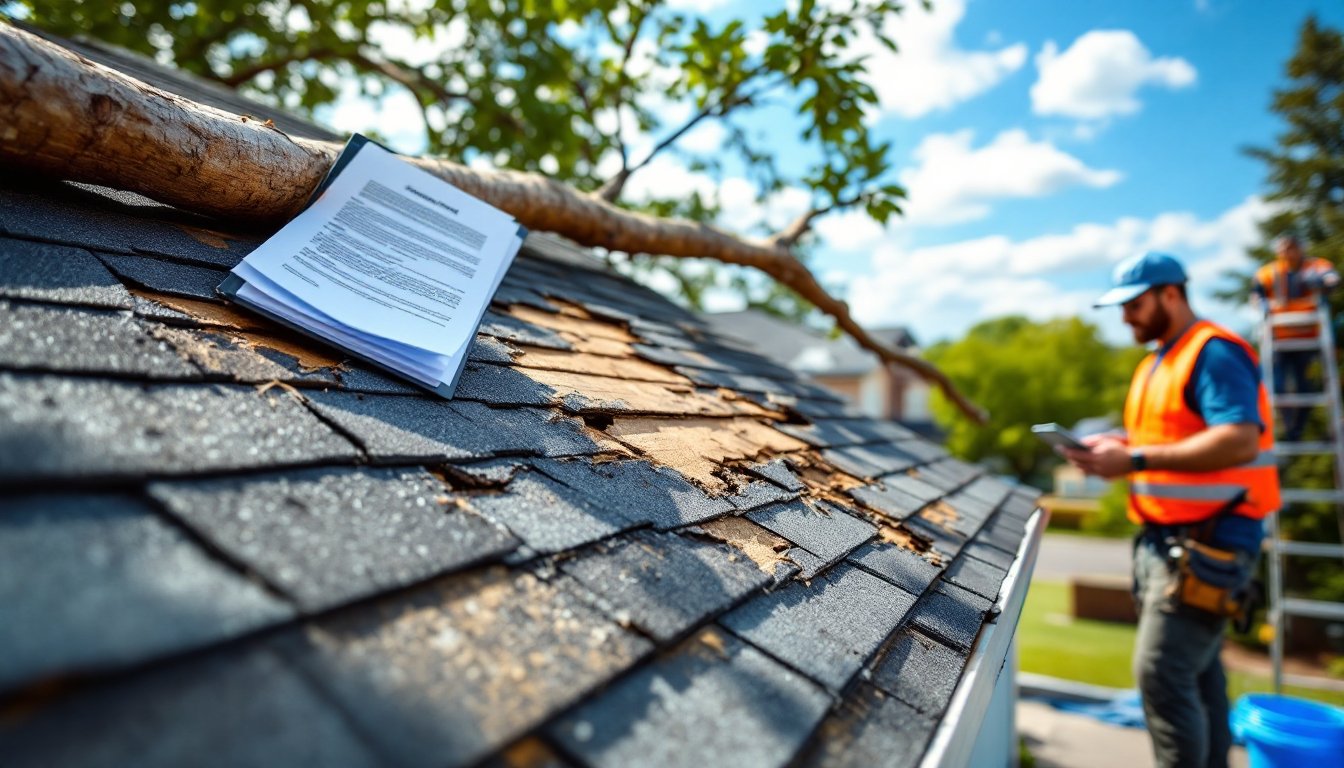
When a tree branch crashes through your roof or a storm rips off shingles, the first question that hits is almost always the same: will my homeowner’s insurance actually pay for this? The answer isn’t always a simple yes or no. Most homeowner’s insurance policies do cover sudden, accidental roof damage from specific causes, but understanding what qualifies, what gets excluded, and how to file a claim can mean the difference between a covered repair and thousands out of pocket. This guide breaks down exactly what’s typically covered, what isn’t, and how to navigate your claim from start to finish.
Table of Contents
ToggleKey Takeaways
- Roof repair covered by insurance typically includes sudden, accidental damage from storms, hail, lightning, and falling trees, but excludes wear and tear, poor maintenance, and gradual water damage.
- Your roof’s age significantly impacts coverage eligibility—roofs over 20 years old may face coverage restrictions, non-renewal, or reduced payouts, making regular inspections and maintenance records critical.
- Understanding your deductible structure is essential: standard deductibles range from $500–$2,500, but wind and hail damage often carries percentage-based deductibles of 1–5% of your home’s insured value.
- Replacement cost value (RCV) policies reimburse full repair costs without depreciation, while actual cash value (ACV) policies subtract depreciation and may save thousands on newer roofs versus older ones.
- Filing a roof claim requires prompt action (typically within 30–60 days), detailed damage documentation with photos and videos, and cooperation with your adjuster to compare contractor estimates and ensure proper coverage approval.
- Flooding and water damage from poor maintenance are almost never covered by standard homeowners insurance; separate flood insurance and preventive roof maintenance are necessary to avoid out-of-pocket costs.
What Most Homeowners Insurance Policies Cover
Standard homeowner’s insurance policies are built around the concept of sudden, accidental loss. Roof damage falls into this category when it results from events outside your control, think a falling tree, a hail storm, or a lightning strike. Most policies cover these perils under the dwelling coverage section.
But, the structure of coverage matters. Older policies often pay for repair or replacement costs based on actual cash value (ACV), which subtracts depreciation from the payout. Newer or upgraded policies may cover replacement cost value (RCV), which reimburses the full cost to fix the roof without the depreciation hit. The difference can be thousands of dollars, especially on a roof that’s been up for 15–20 years.
Deductibles also shape your out-of-pocket reality. Most policies have a standard deductible ($500–$2,500), but many carriers now apply a percentage-based deductible for wind and hail damage, typically 1–5% of your home’s insured value. On a $300,000 home with a 2% deductible, you’re paying $6,000 before insurance kicks in. Check your policy documents or call your agent to know your exact deductible structure before filing a claim.
Common Roof Damage Scenarios: What’s Typically Covered
Storm and Weather Damage
Hail and wind damage are among the most common roof claims, and they’re usually covered if your policy includes standard perils protection. A hailstorm that cracks shingles or a straight-line wind event that lifts or tears shingles typically qualifies for reimbursement. Lightning strikes that ignite the roof structure or cause structural damage are also covered.
Heavy snow load damage, when the weight of snow and ice causes structural failure, can be trickier. If your roof collapses from snow weight, coverage depends on how quickly you clear it and whether your policy includes weight-of-snow peril coverage. Most standard policies don’t automatically include this, particularly in regions with lighter snow seasons. If you live in a heavy-snow climate, ask your agent specifically about snow load coverage.
Rain damage from a storm is covered if the rain enters through existing openings caused by the storm itself (a window blown open, siding torn away, or roof damage from wind or hail). Gradual water infiltration from poor maintenance or aging shingles is not covered.
Fire, Theft, and Vandalism
Fire damage to your roof, whether from a house fire or external wildfire, is covered under standard homeowner’s policies. If a neighbor’s fire spreads to your roof, you’re protected. Vandalism, say, someone damages your roof intentionally, is also typically covered, though you may face a higher deductible for vandalism claims in some policies.
Theft of roof materials (copper flashing, for example) falls under the dwelling coverage if the theft causes structural damage. But, coverage for the stolen materials themselves can be limited: some policies treat theft of building materials like a personal property claim with lower limits.
What’s Usually Not Covered: Exclusions to Know
Wear and tear, aging, and poor maintenance are the big exclusions you need to understand. If your roof is simply old and shingles are deteriorating from normal weathering, that’s on you. Insurance doesn’t cover the slow decline of materials, only sudden, accidental damage.
This is why insurance companies ask about roof age during underwriting. A roof that’s 20+ years old may face coverage restrictions or even non-renewal. Some carriers won’t insure roofs over a certain age: others apply a cap on replacement cost reimbursement. If your roof is nearing the end of its serviceable life (typically 20–25 years for asphalt shingles), you may need a new roof to qualify for coverage or face limited payouts.
Damage from lack of maintenance is explicitly excluded. If gutters are clogged and water backs up under the shingles, that’s not a covered loss, it’s a maintenance failure. Similarly, damage from deferred repairs (letting a small leak worsen over months) won’t be paid. Insurance expects you to maintain your roof in good condition.
Flooding is almost never covered by standard homeowners insurance. If heavy rain causes your roof to leak and water damages ceilings and walls, you’d need a separate flood insurance policy, which must be purchased from the National Flood Insurance Program (NFIP) or private carriers in most cases. Settling or structural movement also typically isn’t covered: that falls under a separate foundation warranty or structural endorsement if available.
Self-inflicted damage, whether accidental (hitting the roof with a ladder) or intentional, is excluded. Damage from improper repairs, DIY work gone wrong, or contractor negligence is also not covered: you’d need to pursue a claim against the contractor’s liability insurance.
How Roof Age and Maintenance Affect Your Coverage
Your roof’s age is one of the single biggest factors in coverage eligibility and payout amounts. Insurance companies view roof age as a proxy for risk. A 5-year-old roof is far less likely to leak during a storm than a 22-year-old one, so underwriting often hinges on a roof inspection.
Many policies require a roof inspection before issuing coverage or upon renewal. If your roof fails inspection, meaning shingles are curling, granules are missing, flashing is rusted, or the structure sags, you may face non-renewal, a coverage denial, or a requirement to repair or replace the roof within a set timeline (often 30–90 days).
Maintenance records matter tremendously when filing a claim. If you have documentation showing regular gutter cleaning, prompt repairs of minor leaks, and professional inspections, the insurer is more likely to approve your claim. Conversely, if adjusters suspect neglect, they may deny the claim or reduce the payout. Keep receipts for roof repairs, photographs of maintenance work, and notes on when you had inspections done.
Conditions like moss or algae growth, missing shingles from previous minor wind events, or visible sagging are red flags. An insurer may argue these conditions pre-existed the damage and reduce the payout accordingly. Before filing a major claim, understand that the adjuster will photograph the entire roof and may deny portions of the claim if pre-existing damage is evident.
Steps to Take When Filing a Roof Repair Claim
Act quickly after discovering roof damage. Most policies require prompt notice, typically within 30–60 days of the loss. Call your agent or carrier immediately and report the damage in writing if possible (email works fine).
Step 1: Document the damage. Take clear photographs and videos of the affected area, the surrounding roof, and any interior damage (water stains, wet insulation). Capture wide shots and close-ups. Don’t enter an attic if there’s structural damage or mold risk. This documentation is your evidence if there’s a dispute about coverage or extent of damage.
Step 2: Prevent further damage. If the roof is leaking, place buckets, tarps, or temporary coverings to stop water intrusion. Keep receipts for emergency repairs (tarping, water removal, temporary covering). Most insurers cover reasonable emergency mitigation costs, and some policies specifically reimburse for emergency tarping: verify this with your adjuster. Costs for emergency tarping typically range from $300–$800 depending on roof size and access.
Step 3: Get a damage estimate. Contact a licensed roofing contractor for a detailed written estimate. Provide a copy to your insurance company. The adjuster may order their own inspection or accept the contractor’s estimate: policies vary. Reputable contractors like those reviewed on Angi or Today’s Homeowner are familiar with insurance claims and can streamline the process.
Step 4: Work with the adjuster. The insurance company will assign an adjuster to inspect the damage and determine the payout. Be present during the inspection to point out damage and answer questions. Provide maintenance records and any documentation of prior roof condition.
Step 5: Review the estimate. Compare the insurance company’s estimate with your contractor’s estimate. If there’s a significant gap, you can dispute it. Some policies allow for an independent appraisal or mediation if you and the insurer disagree on the repair cost.
Step 6: Authorize repairs and claim closure. Once approved, schedule repairs with your contractor. Most insurers will issue payment after inspection of completed work. Keep all receipts and invoices for your records.