Yellow kitchen cabinets are officially back, and they’re not the dated harvest gold of decades past. Whether you’re drawn to soft buttery pastels or rich mustard tones, yellow cabinets bring warmth, personality, and an undeniable focal point to any kitchen. This color choice has momentum right now because it walks the line between trendy and timeless: it works in modern minimalist spaces, charming farmhouse kitchens, and traditional layouts. If you’re considering a kitchen refresh, yellow cabinets offer a bold statement that transforms your everyday cooking space into something genuinely inviting. The best part? You don’t need a full renovation to make it happen.
Table of Contents
ToggleKey Takeaways
- Yellow kitchen cabinets are a timeless design choice that blends trendy appeal with long-lasting value, working seamlessly in modern, farmhouse, and traditional kitchens.
- The right shade of yellow depends on your kitchen’s light: soft pastels work best in smaller spaces with limited light, while bold mustard tones command larger kitchens with ample natural lighting.
- Yellow cabinets pair beautifully with white or light gray countertops, neutral wall colors, and thoughtful hardware choices like brushed brass or matte black finishes.
- DIY cabinet painting is an achievable weekend project requiring proper surface prep, quality primer, and multiple thin paint coats—expect 2-3 days and $500–$1,500 in materials versus $3,000–$8,000+ for professional refinishing.
- Test paint samples on your actual cabinet doors at different times of day before committing, as kitchen lighting shifts dramatically from morning to evening and affects how yellow reads in the space.
- Hardware selection is as critical as cabinet color itself and signals whether your yellow kitchen leans contemporary, farmhouse, or traditional.
Why Yellow Kitchen Cabinets Are Having a Major Design Moment
Yellow has psychology on its side. It’s the color of sunlight, optimism, and energy, qualities most homeowners crave in the heart of their home. Unlike neutral grays and whites that dominate current design feeds, yellow adds character without demanding an overhaul of your entire aesthetic.
From an investment perspective, yellow cabinets signal confident taste. They photograph well, they age gracefully when paired with thoughtful hardware and finishes, and they appeal to a broad range of buyers if resale matters down the road. The 2026 kitchen design landscape increasingly rejects the sterile minimalism of the early 2020s. Homeowners want kitchens that feel lived-in, warm, and distinctly personal.
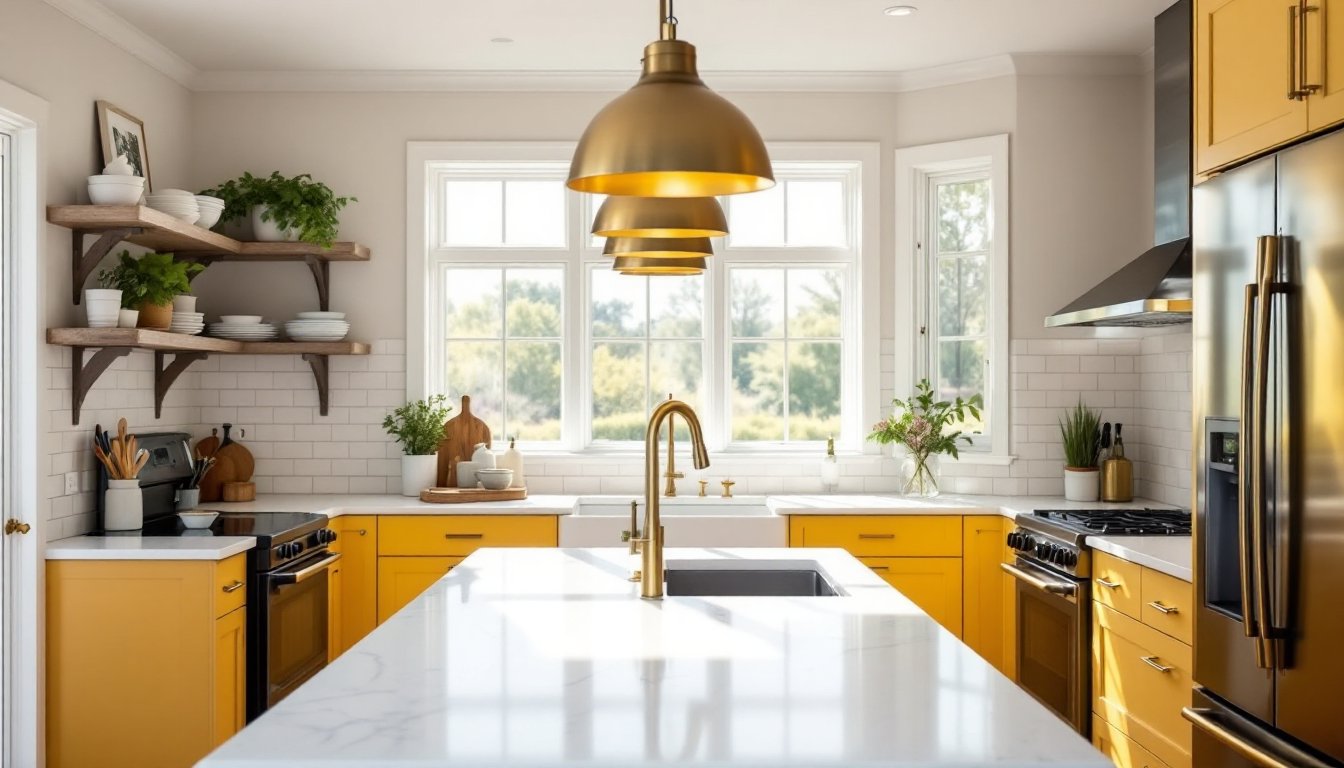
Yellow also plays well with current material trends: natural wood open shelving, stainless steel or matte black hardware, white subway tile, and warm brass accents all complement yellow beautifully. It’s versatile enough to anchor a kitchen redesign or stand alone as a single, high-impact upgrade. When you’re ready to explore inspiration, resources like 10 kitchens with yellow cabinets showcase real-world examples of yellow cabinetry working across different styles and layouts.
Choosing the Right Shade of Yellow For Your Kitchen
Not all yellows are created equal, and picking the wrong shade can make your kitchen feel either washed out or aggressively loud.
Soft Pastels vs. Bold Mustard
Soft pastel yellows, think pale butter, cream-yellow, or gentle primrose, work beautifully in smaller kitchens or spaces with limited natural light. These shades feel airy and approachable: they’re less likely to feel trendy in five years. Pastel yellows pair well with light gray countertops, white trim, and soft hardware finishes like brushed nickel or warm brass.
Bold mustard and golden yellows make a statement. They’re sophisticated when properly executed, especially in larger kitchens with ample natural light or strong artificial lighting. Mustard cabinets demand confident pairing: think dark countertops (slate, dark granite, or black quartz), white or cream backsplash, and matte black or oil-rubbed bronze hardware. These deeper tones feel less “cutesy” and more intentional.
The safest middle ground? A warm, medium yellow, not too pale, not too bold. It reads as sunny without overwhelming the space. Always order paint samples on your actual cabinet doors or plywood panels. Test them at different times of day: kitchen lighting changes dramatically from morning to evening. Artificial overhead lighting will shift a warm yellow differently than north-facing natural light. Spend a few days living with samples before committing to a full cabinet paint job.
Yellow Cabinet Styles: Modern, Farmhouse, and Traditional
Yellow cabinets aren’t locked into one aesthetic. The surrounding details determine whether they read as modern, farmhouse, or traditional.
Modern: Pair matte or satin-finish yellow cabinets with clean-line hardware (stainless steel bar pulls or minimalist brass), white quartz countertops, and sleek black or stainless appliances. Open shelving and hidden handles amplify the contemporary feel. Think less cottage, more Scandinavian-inspired warmth.
Farmhouse: This is where yellow shines brightest. Shaker-style cabinet doors, brass or black cup pulls with visible hardware, a farmhouse sink, subway tile backsplash, and weathered wood shelving or open shelving with painted brackets create an inviting, collected-over-time aesthetic. Pastels work particularly well here.
Traditional: Yellow works in traditional kitchens when you use raised-panel or recessed-panel cabinet doors, ornate hardware (decorative brass pulls or knobs), crown molding, and classic materials like marble countertops or warm wood tones. A traditional yellow kitchen feels sophisticated rather than playful.
The hardware you choose matters as much as the cabinet style itself. It’s one of the first details that signals whether your yellow kitchen leans modern, farmhouse, or classic.
Design Pairings That Work With Yellow Cabinets
Yellow cabinets are forgiving if you follow a few pairing principles.
Countertops: White, cream, or light gray countertops create clean contrast. Dark countertops (black, slate, or deep gray) ground bold mustard yellows and prevent them from feeling too cheerful. Mid-tone wood countertops add warmth and work with any yellow shade.
Backsplash: White subway tile is the reliable choice. Larger format ceramic tiles, hexagonal tile, or subtle geometric patterns also work. Avoid busy patterns that compete with your yellow cabinets: let the color be the focal point.
Hardware: Brushed brass, warm gold, and oil-rubbed bronze soften yellow beautifully. Polished chrome and stainless feel more contemporary. Cup pulls and traditional knobs suit farmhouse styles: slim bar pulls read modern.
Walls: Neutral wall color, soft white, warm cream, or pale gray, allows yellow cabinets to dominate. If you want a secondary wall color, consider a very light warm gray or warm white that echoes the cabinet undertone without competing. A small accent wall in a complementary tone (soft green or soft blue) can work in larger kitchens, but test samples first.
For comprehensive design inspiration, 75 yellow kitchen cabinet ideas provide hundreds of real installations showing how designers pair colors and materials.
DIY Painting Your Cabinets Yellow: A Step-By-Step Guide
Cabinet painting is a weekend project that delivers high impact for reasonable cost. Budget 2-3 days if you’re doing it yourself, and expect about 6-8 hours of active labor per paint coat.
Materials:
- Cabinet paint (semi-gloss or satin acrylic: brands like Benjamin Moore, Sherwin-Williams, or Rustoleum Cabinet Coat are designed for this)
- Primer (shellac-based primer blocks stains and old paint better than latex)
- Sandpaper (120, 150, and 220 grit)
- Painter’s tape, drop cloth, tack cloth
- Paintbrushes (quality synthetic bristles for acrylics) and foam roller (for flat surfaces)
- TSP (trisodium phosphate) or degreaser
- Safety equipment: gloves, safety glasses, dust mask
Steps:
-
Remove cabinet doors and hardware. Label everything with painter’s tape so reassembly isn’t a puzzle. Remove hinges and pulls: paint won’t adhere well over them, and you avoid brush strokes across hardware.
-
Clean thoroughly. Grease and dust prevent paint adhesion. Use TSP or a degreaser on all surfaces, then rinse and dry completely. Wait 24 hours before painting if you used water-based cleaner.
-
Sand all surfaces. Start with 120-grit, progress to 150, then 220 for a smooth final surface. Sand the face frames, doors, and drawer fronts. Dust off with a tack cloth before priming.
-
Prime. Apply one coat of shellac-based primer. This step is non-negotiable if you’re painting over glossy cabinets or hiding dark stains. Shellac primer blocks tannins and dries fast (usually 1-2 hours). Plan for better ventilation, shellac primer has odor.
-
Paint. Apply thin, even coats. Two coats is standard: three coats ensures coverage, especially with lighter colors like yellow on darker substrates. Leave 4-6 hours between coats. Use a brush for edges and recessed panels, a roller for flat surfaces.
-
Reassemble. Wait 48-72 hours before rehanging doors and reinstalling hardware. Paint cures fully over 2-4 weeks: avoid heavy use of cabinets during this time.
Pro Tips:
- Brush strokes matter. Paint in the direction of the wood grain or panel layout.
- Buy quality paint. Cheap paint requires more coats and chips more easily.
- Ventilation prevents dust settling on wet paint. A fan in the window helps, but don’t direct hot air across drying cabinets (causes runs).
- If you have many cabinets, rent a sprayer. It’s faster and gives a smoother finish, though requires skill and cleanup.
If cabinet painting feels overwhelming, professional cabinet refinishing runs $3,000–$8,000+ depending on kitchen size and finish complexity. It’s an option worth considering if you want flawless results without the time commitment. Kitchen design experts at The Kitchn regularly discuss renovation timelines and DIY vs. professional trade-offs.
Conclusion
Yellow kitchen cabinets deliver personality, warmth, and lasting appeal, whether you choose a soft pastel or bold mustard. The key is selecting a shade that complements your light, pairing it thoughtfully with countertops and hardware, and executing the paint job with patience and proper prep. Your kitchen deserves to feel like more than a functional space. A carefully considered color choice makes all the difference.