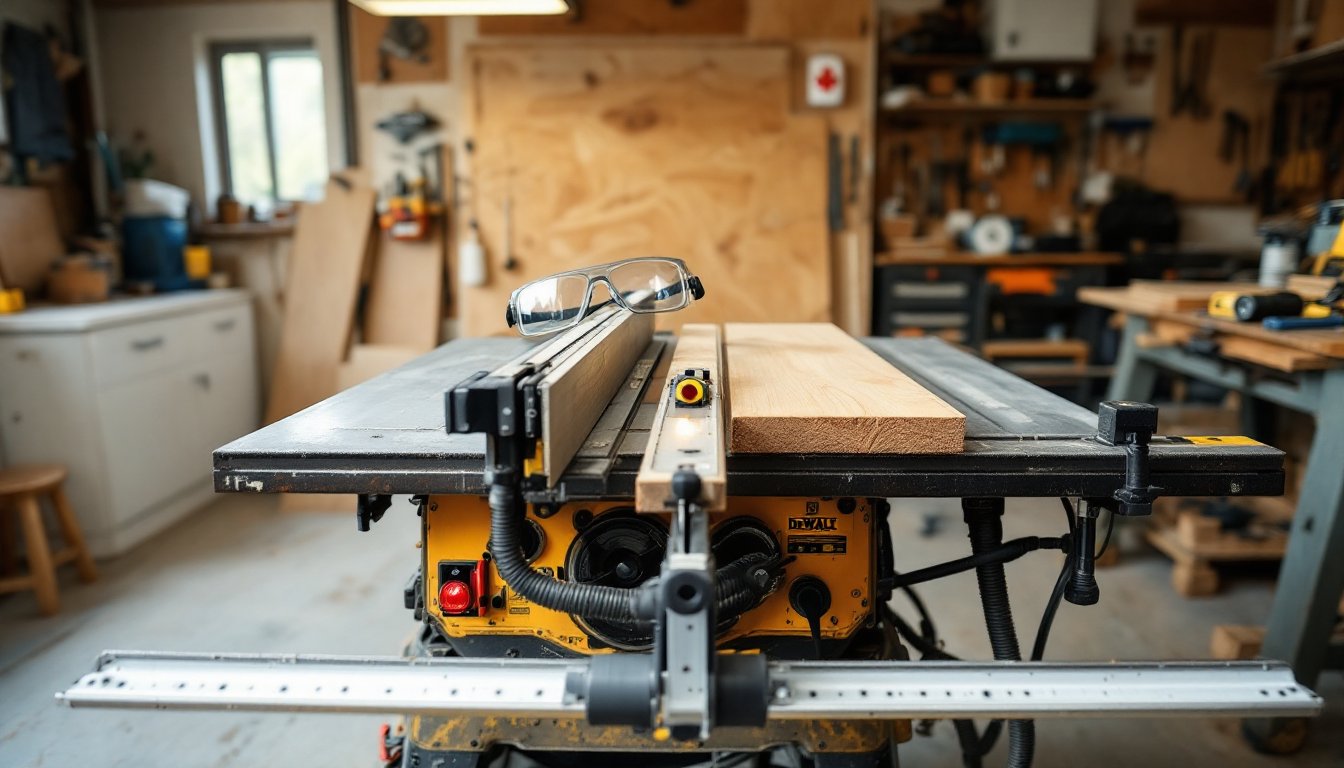
A used table saw can be the backbone of any serious DIY workshop, and the price tag doesn’t have to expensive. Plenty of homeowners avoid used power tools out of caution, but the truth is simpler: with the right inspection knowledge and realistic expectations, a used table saw often outlasts cheaper new alternatives. This guide walks you through evaluating a used table saw’s condition, finding quality machines at fair prices, and getting safe use out of your purchase. Whether you’re building furniture, cutting framing lumber, or breaking down plywood, the fundamentals of smart used tool buying are the same.
Table of Contents
ToggleKey Takeaways
- A used table saw from the past 10-20 years can outperform budget new models while costing $200-$600, making it a smart investment for serious DIYers.
- Inspect the arbor spindle for wobble, check motor performance under load, and verify blade-to-fence alignment before purchasing—these are the critical factors that determine a used table saw’s true condition.
- Sourcing a used table saw from estate sales, auctions, and local marketplaces beats sight-unseen online purchases, reducing the risk of costly shipping and hidden damage.
- Budget for a sharp replacement blade ($40-$80), proper maintenance with light machine oil, and monthly safety inspections to ensure safe and accurate performance after your purchase.
- Avoid structural damage like bent frames or cracked castings, and calculate total ownership cost including repairs to ensure you’re not overpaying for a used table saw that needs significant work.
Why Invest In A Used Table Saw Instead Of New
New table saws start around $150 for benchtop models and jump to $500–$1,500 for contractor and cabinet saws. A used cabinet or contractor saw from 10–20 years ago often handles heavy work better than today’s budget-friendly alternatives, and you’ll pay $200–$600 for a solid machine. Older Craftsman, DeWalt, Makita, and Jet models hold up remarkably well with basic maintenance.
Durability is the real advantage. Vintage contractor saws (1990s–2010s) feature cast-iron tops, heftier motors, and deeper blade cavities than modern benchtop saws. They won’t tip over when ripping a 2×12, and the resale market for these machines stays relatively stable. If you’re serious about DIY, cutting joinery, making cabinet boxes, ripping rough lumber to width, a used professional-grade saw beats a new hobby-grade one every time.
Cost savings also free up budget for a good blade, a quality fence upgrade, or mobile base. Many DIYers skip the “perfect” saw and buy a rough-condition machine cheap, then restore it. That’s a legitimate strategy if you enjoy tinkering and have time. Just be honest about whether you’re buying a project or a tool ready to work today.
What To Look For When Buying A Used Table Saw
The best used table saw buys happen when you inspect before handing over money. Bring a small level, a straightedge, and a flashlight. Look at the saw from different angles, plug it in, and listen to it run (or ask the seller to run it if you’re not comfortable). Don’t let “it just needs cleaning” excuses fool you, cosmetics don’t matter, function does.
Blade Condition And Motor Performance
Spindle run-out (wobble in the blade arbor) is a deal-breaker. Spin the blade by hand (unplugged) and watch the blade tip. It should move less than 1/32-inch side-to-side. If it dances around, the arbor bearings are worn, and replacement costs $100–$300 in labor plus parts.
Check the blade itself. A dull, rusted, or damaged blade doesn’t reflect the saw’s true condition, blades are consumables, and a $40–$80 replacement is normal. What matters is the arbor shaft: pull the bolt and wiggle the shaft. There shouldn’t be play, and the threads should feel clean and tight.
Plug it in and run it under no load for 30 seconds. The motor should start promptly, run smoothly, and not smoke or smell burnt. Listen for grinding or squealing in the bearings. A slight hum is normal: a metal-on-metal screech is not.
Structural Integrity And Alignment
Place a small level on the table (front to back and side to side). A used saw might be slightly out, 1/16-inch over 12 inches is acceptable if the blade tilt works smoothly. If the table rocks or has visible gaps under the level, the frame is bent or warped, which is hard to correct.
Check blade to fence alignment. Raise the blade to full height, push it forward against the fence, and measure the distance between blade and fence at the front and back of the blade. The difference should be zero or less than 1/16-inch. A drift of 1/4-inch or more means fence slop or frame twist, fixable with patience, but a cost and time factor.
Look underneath. Rust on the undercarriage and trunnion hardware is cosmetic: rust inside the casting where the blade arbor lives is worse. Light surface rust wipes clean with oil: deep pitting suggests the saw sat outside. Tap the underside with a wrench, it should ring like solid metal, not dull or hollow (which indicates cracks).
Spin the tilt and elevation wheels. They should turn smoothly with no grinding. A bit of stiffness from dried grease is fine: squealing or resistance that suddenly releases is bad, indicating worn threads or damaged gears.
Where To Find Quality Used Table Saws
Estate sales and tool auctions are goldmines. When someone retires or passes away, their workshop tools often sell as a lot at a fraction of new cost. Check local auctioneers’ websites and Facebook Marketplace “tool” sections.
Craigslist and Facebook Marketplace work if you inspect in person and ask detailed questions before visiting. Avoid sellers who can’t answer basic questions about how long they’ve owned the tool or why they’re selling. Legitimate DIYers usually give straight answers: flippers and tool resellers sometimes obscure history.
Pawn shops can be hit-or-miss. A pawn shop might list a saw that’s been tested, but markup is higher than private sales. Expect to pay 20–30% more than equivalent private-market machines.
Secondhand tool retailers and sites like Fixer-Upper databases sometimes handle inventory, though availability varies regionally. Woodworking project plans and workshop guides from established DIY sites often reference reliable models and where to scout them. Word-of-mouth through local woodworking clubs, makerspaces, and home improvement forums can surface machines before they hit public listings.
Do NOT buy sight-unseen online unless you have heavy buyer protections and a clear return policy. Shipping cost for a 300+ lb. saw is $50–$150, and a broken arbor discovered after delivery is a nightmare.
Pricing Your Used Table Saw Purchase Wisely
A benchtop saw (plastic body, 10-inch blade) in good condition runs $100–$250. Contractor saws (cast-iron top, steel frame, 1.5–2 hp motor) typically sell for $250–$600. Cabinet saws (fully enclosed base, 3+ hp) usually cost $600–$1,200+ if they’re solid machines.
Pricing depends on brand, age, condition, and local market. A 15-year-old Craftsman contractor saw in working order might fetch $300 in an active workshop town but $150 in a rural area with fewer DIYers. Check sold listings on Marketplace and Craigslist for your region to establish baseline prices.
Factor in hidden costs: a new cord, capacitor replacement, or blade alignment service can add $50–$150. Don’t negotiate down to a price that reflects “free labor” repair work. If you spot a $200 saw that needs a $150 motor capacitor fix, that’s a $350 outlay, not a bargain.
Home improvement tool reviews and workshop resources often include pricing trends for classic models, helping you spot realistic asks. A seller asking $800 for a 20-year-old saw “because it’s a Sawstop replica” is overestimating: original commercial Sawstops hold value, but knockoffs don’t.
Walk away from machines with structural damage, even if the price seems too good. Bent frames, cracked castings, and trunnion twist aren’t worth learning on.
Safety And Maintenance After Your Purchase
Before your first cut, inspect the blade and arbor mounting. Replace the blade with a sharp, high-quality model (a 40-tooth carbide blade is a solid all-purpose choice). Cost is $40–$80, and a dull blade on an old saw is a finger-risking mistake.
Wear safety glasses every time you use the saw, no excuses. A table saw throws splinters and debris at high speed. Add hearing protection if the motor drones above 85 decibels (a phone decibel-meter app estimates this). Work gloves are tempting but dangerous near a spinning blade: a tapered glove can catch. Skip them.
Clean and lubricate the tilt and elevation mechanisms. Use a light machine oil (3-in-1 or sewing-machine oil works) on the gears and shafts, and wipe away old grease first. Stiff mechanics cause binding and kickback.
Inspect the fence and rails monthly. Dust and resin build up, and that affects ripping accuracy. Home renovation and classic restoration resources often detail deep-cleaning procedures for cast-iron tables and mechanisms. A wire brush and light machine oil remove surface oxidation without damaging the casting.
Check the cord for damage. A cracked insulation near a saw can be a shock hazard. If it’s frayed, replace it, a new power cord costs $15–$30.
Run the saw empty (no load, no blade) monthly to ensure smooth operation. Listen for new sounds, squealing, grinding, or rattling can signal bearing wear or loose hardware. Tighten bolts under the table and trunnion housing if needed, but don’t over-torque: cast iron cracks.
Final Thoughts
A used table saw is a smart investment if you match the machine to your actual needs and inspect it honestly. Buy from honest sellers, budget for a fresh blade and minor maintenance, and don’t skip safety practice. Your workshop will be stronger for it.