
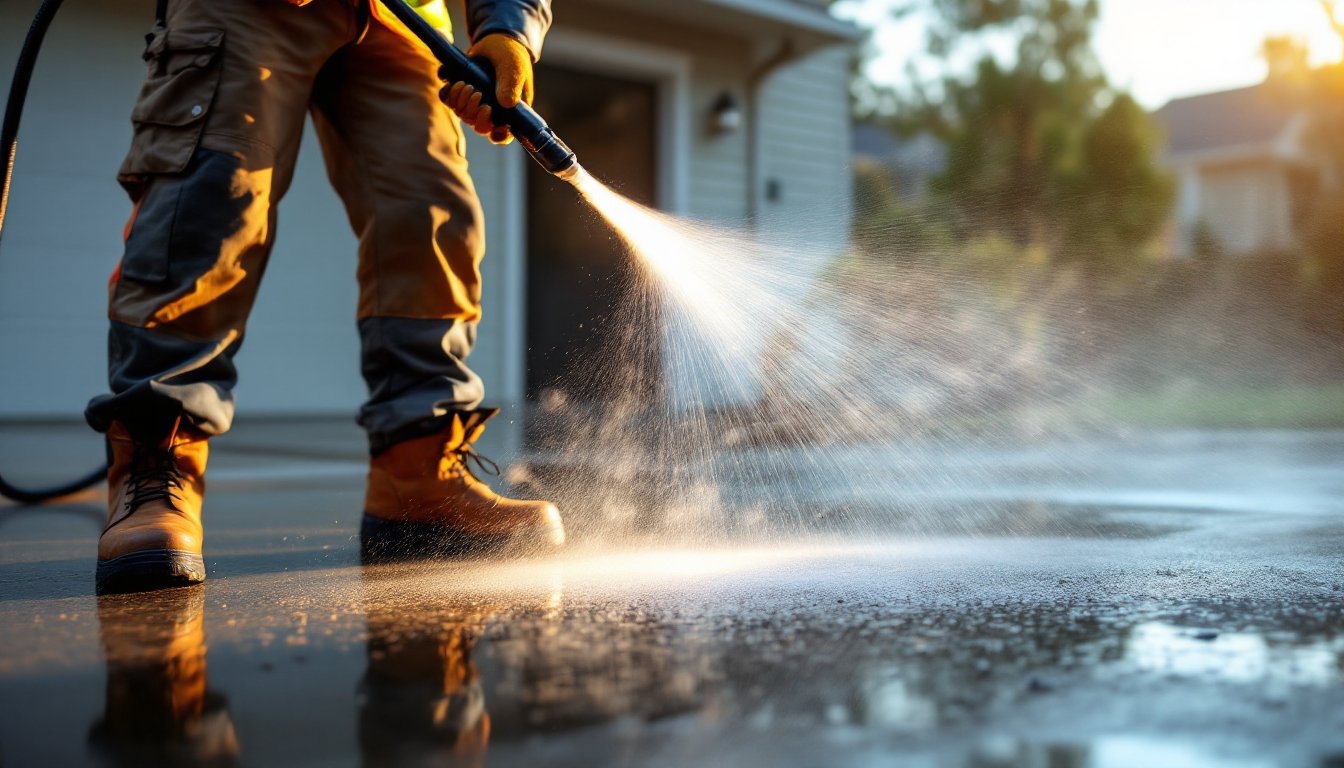
If you’re running a pressure washing business, whether full-time or as a side hustle, you already know that one accident can tank your operation. A client’s landscaping gets damaged, their vehicle takes a paint chip, or someone slips on your freshly cleaned driveway, and suddenly you’re facing liability claims that could wipe out months of profit. That’s why cheap pressure washing insurance isn’t optional: it’s the smart barrier between your business and financial disaster. The good news? Affordable coverage exists, and you don’t need to spend a fortune to stay protected. This guide walks you through finding the right policy at the right price.
Table of Contents
ToggleKey Takeaways
- Cheap pressure washing insurance protects your business and personal assets from liability claims caused by property damage or injuries—covering claims from $300,000 to $1 million per occurrence at an affordable cost.
- Most solo pressure washing operators can find adequate coverage for $300–$800 annually, and joining a trade association like CIMA or PWPA can reduce rates by 10–20% through group discounts.
- Bundles like Business Owner’s Policies (BOPs) combining general liability, property, and commercial auto coverage are typically 20–30% cheaper than purchasing separate policies.
- Completing pressure washer safety certification courses can earn 5–10% premium discounts, while maintaining a claims-free history for three years significantly reduces renewal rates.
- Avoid suspiciously low-priced policies from unknown carriers, always verify insurer ratings with A.M. Best, and ensure your policy specifically covers pressure washing work—not just general contracting.
- Paying annually instead of monthly saves 5–10%, and increasing your deductible from $500 to $1,000 can cut premiums by 15–20% without sacrificing essential coverage.
Why Pressure Washing Contractors Need Insurance Coverage
Pressure washing is a contact sport. You’re spraying water at high velocity, typically 1,500 to 4,000 PSI, near vehicles, siding, windows, and people. Even the most careful operator can cause damage. A slip-and-fall claim, paint or stucco damage to a home, or injury to a helper can cost thousands in repairs and medical bills.
Without insurance, you’re personally liable. That means the client can sue you directly, seize assets, or garnish future earnings. Insurance transfers that risk to a carrier, protecting both your business and personal finances. Also, many clients won’t hire uninsured contractors, they want proof of coverage before you even touch their property.
In many jurisdictions, liability insurance isn’t legally mandatory for solo pressure washers, but it’s practically essential. Bonds and permits in some municipalities may require it. Beyond legal protection, insurance gives you credibility, lets you bid on larger jobs, and keeps you in business when accidents happen.
What Does Pressure Washing Insurance Actually Cover?
Pressure washing liability insurance primarily covers bodily injury and property damage claims filed by clients or third parties. If you accidentally damage a client’s fence or a parked car near the job site, the policy typically covers repair or replacement costs. If someone is injured on your watch, a slip on wet pavement, debris in the eye, medical expenses fall under coverage.
Coverage limits usually range from $300,000 to $1 million per occurrence. A basic package might include $1 million general liability for $300–$600 per year for a solo operator. Equipment damage or theft is typically not included in standard liability: you’d need a separate inland marine or equipment floater policy for that.
Most policies exclude intentional damage, criminal acts, and work performed without proper permits. They also won’t cover violations of local codes, for instance, if you violate a water restriction ordinance and damage landscape plantings. Always read the fine print to understand what’s in and out.
General Liability vs. Commercial Auto Insurance
General liability covers bodily injury and property damage at the job site. Commercial auto insurance covers vehicles used for business transport. If you’re using a truck with a pressure washing rig, you need both: general liability for the work itself, and commercial auto for vehicle-related incidents.
Some policies bundle these as a business owner’s policy (BOP), which is often cheaper than buying them separately. A BOP typically includes general liability, property coverage for your equipment, and sometimes commercial auto, all in one package. For a pressure washing side hustle, a BOP can be the most economical choice, especially if you own a truck used partly for personal use (commercial auto riders exist for that scenario).
How To Find Affordable Pressure Washing Insurance Quotes
Start by contacting insurance brokers who specialize in contractor or service industry policies. They’ll ask about your business structure (sole proprietor, LLC, corporation), annual revenue, number of employees, and service areas. Be honest about your operation, underreporting revenue or employees can void your policy later.
Use online quote platforms to compare rates from multiple carriers. Most insurers offer instant quotes or callbacks within 24 hours. Gather at least three quotes before deciding: prices vary significantly based on claims history, credit score, and how the insurer categorizes pressure washing.
Consider joining a trade association like the Cleaning Industry Management Association (CIMA) or the Professional Pressure Washers Association (PWPA). Many offer discounted group policies for members. Group rates are often 10–20% cheaper than individual quotes.
Local independent insurance agents often have access to non-standard carriers that offer competitive rates to contractors with minor claims histories. If you’ve had a previous claim, an independent agent can find insurers more willing to quote you than big national carriers. Services like Angi provide contractor cost guides and can give you a ballpark sense of what others in your region pay for similar coverage.
Ways To Lower Your Pressure Washing Insurance Premiums
Complete safety training. Taking a pressure washer safety certification course, offered by many vocational schools and online, can earn you a 5–10% discount. Insurers reward documented training because it reduces claim frequency.
Maintain a clean claims history. No claims for three years or more drops your rate significantly. Even if you’ve had a minor claim, avoid another one: your renewal rate will reflect cumulative claims.
Increase your deductible. Choosing a $1,000 deductible instead of $500 can cut premiums by 15–20%. You’re betting you won’t have frequent small claims, which is reasonable if you’re careful.
Bundle policies. A BOP combining general liability, property, and commercial auto is typically 20–30% cheaper than three separate policies.
Pay annually instead of monthly. Monthly payments carry financing fees. Paying once a year saves 5–10%.
Limit employee count. If you’re running a solo operation, your rate is lower than a crew of three. Scaling up means higher premiums, so factor that into pricing your services. Resources like HomeAdvisor show what homeowners spend on pressure washing, helping you benchmark your rates.
Document your practices. Keep records of equipment maintenance, client contracts, and incident reports (even near-misses). Insurers may offer discounts for documented safety protocols. Renew your policy on time, lapses in coverage trigger rate hikes or denials.
Red Flags: Cheap Insurance Policies To Avoid
If a quote seems too good to be true, it probably is. A policy priced 50% below market for your risk profile is likely to have hidden exclusions, low limits, or a non-reputable carrier. Before signing, check the insurer’s financial rating with A.M. Best or JD Power. A low rating means the company might not pay claims when you need them.
Avoid policies with vague coverage descriptions. Legitimate policies specify limits per occurrence and aggregate limits, deductibles, and excluded situations. If an agent can’t explain exactly what’s covered, walk away.
Watch for carriers that don’t ask detailed questions about your operation. Legitimate insurers probe your safety practices, past claims, and revenue. No questions = no understanding of your risk, which often precedes claim denials.
Never assume a “general contractors” policy covers pressure washing. Many don’t. Pressure washing is classified separately because of equipment-specific risks. Misclassification can result in denied claims when you need coverage most.
Be skeptical of online-only carriers with zero local support. If you need to file a claim, you want an agent or adjuster you can reach by phone, not just a chatbot. Experts on Bob Vila and similar resources consistently note that local accountability matters in contractor insurance. Check reviews on the National Association of Insurance Commissioners (NAIC) complaint database before committing. A carrier with a high complaint ratio for claim denials is a red flag, even if premiums are low.
Conclusion
Cheap pressure washing insurance is achievable, expect $300–$800 annually for a solo operation with $1 million in coverage. The key is shopping around, qualifying for discounts, and not sacrificing coverage for a lower premium. Your insurance is your safety net. Get it right, and you can build a sustainable, profitable pressure washing business without losing sleep over liability.