
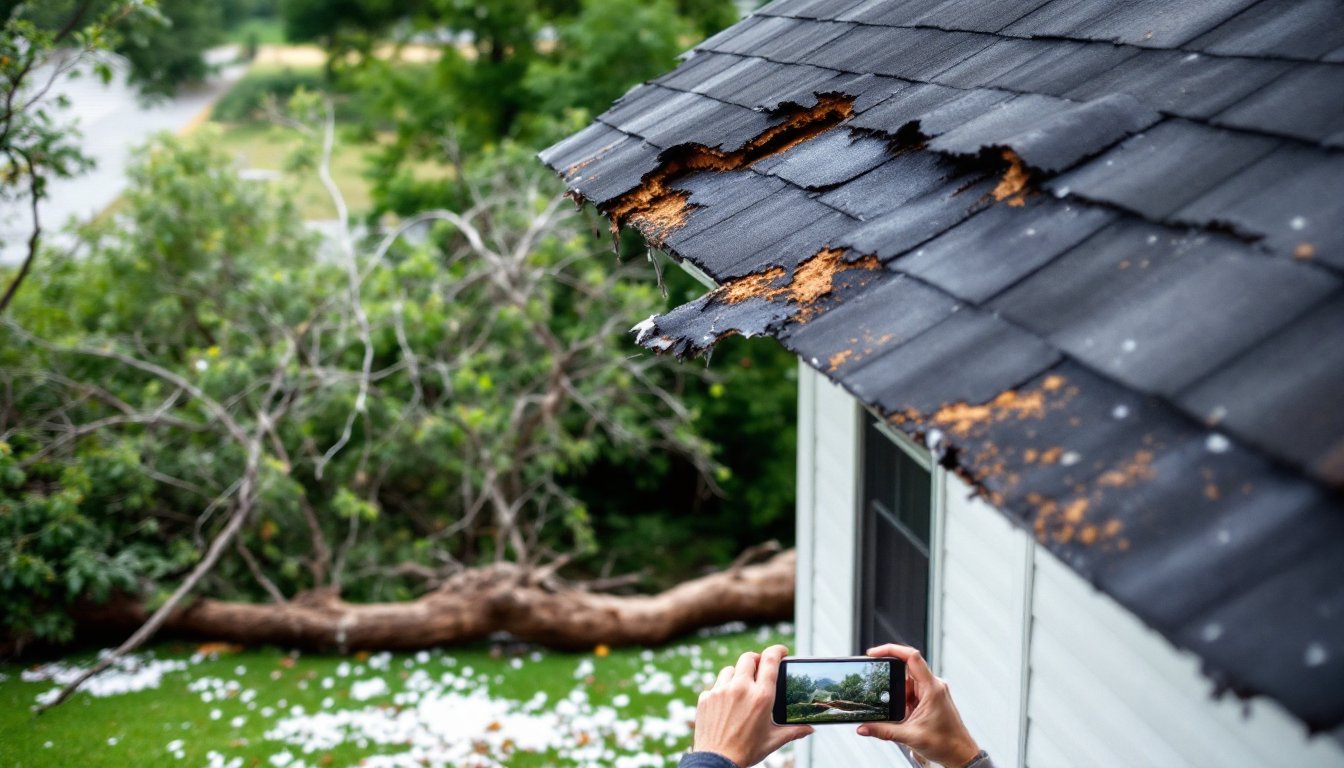
When a storm tears shingles off your roof or a tree branch punches through the valley, your first thought probably isn’t “Good thing I have homeowners insurance”, but it should be. Most homeowners policies do cover roof repairs, though the details matter more than you’d expect. Understanding what’s actually covered, how deductibles work, and the claims process itself can save you thousands of dollars and weeks of frustration. This guide walks you through the realities of insurance roof repair, so you know exactly where you stand before damage strikes.
Table of Contents
ToggleKey Takeaways
- Most homeowners insurance policies cover roof repairs caused by sudden, accidental events like wind, hail, fire, and falling tree limbs, but exclude age-related wear and poor maintenance.
- Insurance roof repair claims involve a deductible of $500–$1,500 (or 2–5% of your home’s insured value), which resets with each separate claim event, so understanding your specific deductible is critical before damage occurs.
- Document damage immediately with photos and video from multiple angles, contact your insurer within 30–90 days, and attend the adjuster inspection to ensure accurate assessment of your roof repair needs.
- Age-related wear, poor installation, lack of maintenance, and cosmetic damage are typically not covered by insurance, making regular gutter cleaning and roof inspections essential for maintaining coverage eligibility.
- If you disagree with the insurer’s assessment, request a re-inspection, submit additional documentation, or hire a public adjuster to negotiate a higher settlement for your insurance roof repair claim.
What Insurance Covers for Roof Repairs
Your homeowners insurance typically covers roof damage caused by sudden, accidental events, wind, hail, fire, falling tree limbs, and impact damage. The coverage is designed to protect against unforeseen incidents, not gradual wear or poor maintenance. Most policies pay to repair or replace the damaged portion of your roof, though coverage limits and deductibles apply.
The catch is that insurance doesn’t cover cosmetic damage or deterioration that occurs over time. A roof slowly losing granules or showing age-related leaks won’t trigger a claim. Insurance also won’t cover damage that results from negligence, like failing to clear gutters or ignoring a known leak for months.
Understanding Your Homeowners Policy Deductible
Your deductible is the amount you pay out of pocket before insurance kicks in. Most homeowners policies have a standard deductible of $500 to $1,500, though some policies with higher deductibles may offer lower premiums. A few key points about roof deductibles:
Some insurance companies apply a percentage-based deductible for roof claims instead of a flat amount, typically 2% to 5% of your home’s insured value. If your home is insured for $300,000 and you have a 3% deductible, you’d pay $9,000 before the insurance company covers the rest. This is especially important to know before filing a claim.
Your deductible resets per claim, not per year. Each incident triggering a separate claim means a new deductible applies. If hail damages your roof one month and wind damages your deck the next, you’ll owe your deductible twice, unless they’re covered under the same loss event.
Check your actual policy document to confirm your deductible amount. Don’t rely on memory or assumptions. Call your insurance agent and ask specifically about roof damage deductibles, as they may differ from your standard deductible.
Common Roof Damage Covered by Insurance
Insurance typically covers the following types of roof damage:
Wind damage remains the most common covered loss. Shingles blown off, flashing torn away, or structural damage from high winds usually qualifies. Wind damage often occurs during storms, and insurers expect claims after severe weather events.
Hail damage is explicitly covered by most policies. Even small hail can dent metal roofing or create impact marks on asphalt shingles that lead to premature failure. Many policies include hail coverage without separate riders, though some insurers in hail-prone areas may charge extra or apply special deductibles.
Fire damage from any source, whether your house catches fire or embers from a neighbor’s fire damage your roof, is covered. This includes damage from electrical fires, lightning strikes, and wildfires.
Falling objects like tree branches, antennas, or chimney parts that land on your roof are covered. But, if the tree is diseased or clearly dead, some insurers may deny the claim, arguing you had a duty to maintain the property.
Sudden, accidental damage from events like a car or plane striking the roof would be covered, though the other party’s insurance might be liable instead. According to roof repair cost data, homeowners insurance typically covers these kinds of sudden losses, though coverage varies by insurer and policy.
The key word across all these examples is sudden. Gradual leaks, normal aging, poor installation, and lack of maintenance don’t qualify.
What’s Typically Not Covered
Your homeowners policy explicitly excludes several categories of roof damage. Knowing these exclusions upfront helps you decide whether to request coverage or pay out of pocket.
Age-related wear and tear is the biggest exclusion. Shingles that have reached their lifespan, typically 20 to 30 years for asphalt, 40 to 50 years for metal, depending on the product, simply aren’t covered, even if they’re still technically intact. Insurers argue these are maintenance issues, not sudden damage.
Poor installation or workmanship isn’t covered by homeowners insurance. If your roofer installed shingles incorrectly and they fail prematurely, that’s a dispute between you and the contractor, not an insurance claim.
Lack of maintenance voids coverage for related damage. If gutters are clogged, water backs up under the roofline, and rotting occurs, the insurer will likely deny the claim, arguing you failed to maintain the property. Regular gutter cleaning and roof inspections are your responsibility.
Cosmetic damage without functional impact usually isn’t covered. Isolated missing shingles that don’t affect water intrusion or a few cracked tiles might not meet the threshold for a claim, depending on your policy and insurer.
Damage from poor ventilation or condensation falls under maintenance, not insurable loss. If moisture trapped in your attic rots the decking, that’s considered a preventable condition.
Damage from neglect or violation of building codes won’t be covered. If your roof was installed without permits or violates local codes, you’re on your own. According to average roof replacement costs, addressing code violations before filing a claim can be costly, but it’s necessary for coverage eligibility.
Always review your specific policy, as exclusions vary by insurer and location.
How to File a Roof Repair Insurance Claim
Filing a claim requires organization, documentation, and speed. Most insurers want notice within a specific window, typically 30 to 90 days, after damage occurs. Don’t delay.
Step 1: Document the damage immediately. Take photos and video from multiple angles, both close-ups and wide shots. Capture the damage in good lighting so details are clear. If weather permits, document the damage from the ground: don’t climb on the roof yourself while it’s wet or unstable. Document any debris on the property (branches, hail, etc.) as evidence of the cause.
Step 2: Contact your insurance agent or company. Call the main customer service line or file a claim online through your insurer’s website or app. Provide a clear description of what happened, when it happened, and what you observed. Don’t minimize or exaggerate the damage: stick to facts.
Step 3: File a formal claim. Your insurer will send you a claim form and assign a claims adjuster. Complete all required fields accurately and honestly. Provide your photos, video, and any other documentation.
Step 4: Schedule the adjuster inspection. The insurer will send an adjuster to inspect the roof and assess the damage. Be present during this inspection if possible. Point out damage you’ve identified, but don’t argue with the adjuster’s assessment on the spot. Take your own notes and photos for comparison.
Documentation and Professional Inspections
A professional roof inspection before filing a claim can strengthen your position. Some homeowners hire an independent roofing contractor, not the one who will do repairs, to document the damage and provide a written estimate. This gives you a second opinion if the adjuster’s assessment seems low or if damage isn’t immediately obvious.
If you disagree with the insurer’s assessment, you have options. Request a re-inspection, submit additional documentation, or pursue mediation through your state’s insurance commissioner’s office. In some cases, if damage is substantial and the insurer lowballs the estimate, hiring a public adjuster (who works for you, not the insurance company) can help negotiate a higher settlement, though you’ll pay a percentage of the increase as their fee.
Once the claim is approved, get multiple repair estimates from licensed, insured roofing contractors. The insurer will review these and issue payment based on the agreed-upon scope. Remember that the insurance payout may not cover every upgrade you’d like, such as replacing the entire roof when only one section has storm damage. Understand what the policy actually covers versus what you’ll pay out of pocket. Professional roofing experts in your area can help assess damage and provide honest estimates for insurance claims.
Conclusion
Insurance roof repair coverage is straightforward for sudden damage but murky when maintenance, age, or causation enters the picture. Know your deductible, understand what your policy covers, and document damage thoroughly before filing a claim. Don’t assume anything, read your actual policy and ask your agent questions. When damage occurs, act fast, gather evidence, and stay organized through the claims process. A little upfront knowledge now could save you thousands later.